Wenzl’s Collision Center Publishes ADAS Calibration Guide and Checklist for Lincoln Drivers
Lincoln, NE - November 11, 2026 - PRESSADVANTAGE - Wenzl's Collision Center is publishing a consumer guide and free
Press Release Disclaimer: This is a press release distributed through the XPR Media network. It has not been independently verified by our newsroom.

Lincoln, NE – November 11, 2026 – PRESSADVANTAGE –
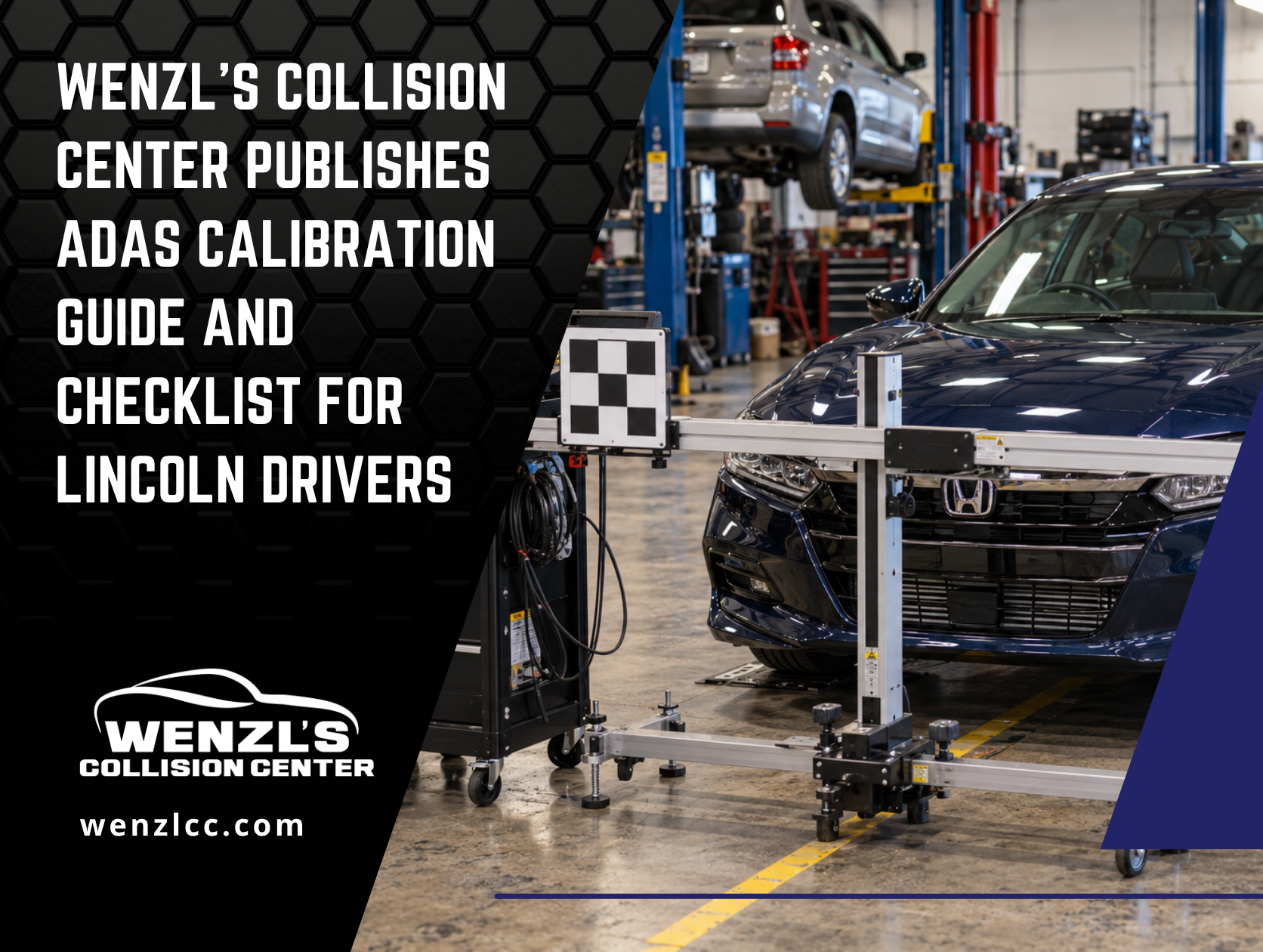
Wenzl’s Collision Center is publishing a consumer guide and free checklist to help Lincoln drivers understand Advanced Driver Assistance Systems (ADAS) calibration following windshield replacement or collision repair. The November resources explain when calibration may be required, how different calibration methods work, what vehicle owners can expect to pay, and which documents can help verify that the procedure was completed.
The newly published ADAS Calibration Guide provides information about the cameras, radar sensors, and electronic systems that support modern vehicle safety features. A companion ADAS Calibration Checklist offers a practical reference that drivers can bring to a repair facility when discussing calibration requirements.
Modern vehicles increasingly rely on electronic driver assistance features, including automatic emergency braking, lane-keeping assistance, adaptive cruise control, blind spot monitoring, and forward collision warnings. These systems use cameras and sensors to monitor surrounding conditions and provide warnings or assistance during driving.
When a windshield is replaced or collision repairs affect certain components, the positioning or operating parameters of these sensors may need to be checked and adjusted according to manufacturer requirements.
The November guidance explains that ADAS calibration is a technical procedure used to establish or verify the alignment and operating parameters of applicable cameras and sensors. Its purpose is to help ensure that the systems interpret their surroundings according to the vehicle manufacturer’s specifications.
Wenzl’s Collision Center identifies windshield replacement as one of the common situations in which calibration may be required. Many vehicles have forward-facing cameras mounted near the windshield, and replacing the glass can affect the camera’s position or require a manufacturer-specified calibration procedure.
Collision repairs involving bumpers, grilles, mirrors, and body panels can also create calibration requirements when sensors or their mounting locations are disturbed.
Other circumstances identified in the guide include certain suspension repairs, wheel alignment operations that affect vehicle geometry, replacement of cameras or radar units, and removal or reinstallation of components associated with ADAS equipment.
The resources emphasize that calibration requirements cannot be determined solely by whether a dashboard warning light is illuminated. Some manufacturers specify calibration after particular repair operations even when no warning message appears.
The guide also distinguishes three approaches to calibration: static, dynamic, and dual calibration.
Static calibration generally takes place while the vehicle remains stationary. Technicians use specified targets, measurements, and equipment in a controlled environment to perform the manufacturer’s procedure.
Dynamic calibration involves driving the vehicle under specified conditions while compatible diagnostic equipment supports the required calibration process.
Dual calibration combines stationary and driving-based procedures when both are required for a particular vehicle.
The appropriate method depends on the vehicle’s make, model, installed equipment, and manufacturer instructions. The guide encourages consumers to ask which procedure applies to their vehicle rather than assuming every calibration follows the same process.
Another focus of the November publication is calibration cost. Wenzl’s consumer guide provides an illustrative range of approximately $150 to $600 for many calibration procedures, with an average near $300. More complex vehicles or procedures involving multiple systems may exceed $1,000.
The guide identifies vehicle configuration, the number of affected systems, calibration method, and local labor requirements as factors that can influence the final cost. These figures are general estimates rather than guaranteed pricing for individual vehicles.
Calibration time can also vary. The guide describes one to three hours as a common timeframe, although the actual duration depends on the required procedures and the vehicle’s condition.
Insurance coverage is another consideration. When calibration is associated with a covered collision repair or windshield replacement, the procedure may be included in the insurance claim, subject to the applicable policy and insurer’s determination.
Wenzl’s Collision Center encourages vehicle owners to review their estimates and confirm whether manufacturer-required calibration operations have been documented before approving repairs.
The guide additionally addresses the relationship between windshield specifications and camera calibration. Replacement glass must meet applicable vehicle requirements because differences in glass characteristics or camera mounting can affect calibration procedures and results.
Through its auto body repair services, Wenzl’s Collision Center evaluates collision damage and considers manufacturer-specific repair requirements involving affected vehicle components.
The companion checklist provides six questions that drivers can ask a repair facility before authorizing work. These address whether calibration is required, which manufacturer procedures will be followed, whether static or dynamic methods apply, whether replacement glass meets specifications, what documentation will be provided, and how insurance-related questions will be handled.
The checklist also identifies records that can help drivers understand the completed work, including pre-repair diagnostic scan results, post-repair scan information, and calibration reports showing the outcome of the applicable procedure.
The publication distinguishes diagnostic scanning from calibration. Scanning retrieves information about electronic system conditions, while calibration follows specific procedures for the relevant cameras or sensors. One operation does not automatically replace the other.
For Lincoln drivers, the guidance recommends retaining calibration documentation with other vehicle service records. If warning lights appear or driver assistance features behave unexpectedly after repairs, the vehicle should be evaluated by a qualified technician.
The November resources are intended to make a technical part of modern collision repair easier for consumers to understand. By reviewing manufacturer requirements, asking specific questions, and requesting appropriate documentation, drivers can make more informed decisions about ADAS-related repair work.
Wenzl’s Collision Center is an independent, family-owned collision repair business serving Lincoln, Nebraska, since 1971. Located at 4515 N 62nd Street, Lincoln, NE 68507, the company provides collision repair, auto body repair, and manufacturer-specific ADAS calibration services. Vehicle owners can contact the shop at (402) 466-0821 for information about inspections, repairs, and appointments.
###
For more information about Wenzl’s Collision Center, contact the company here:
Wenzl’s Collision Center
Kelli & Martin Wenzl
(402) 466 0821
kwenzl@wenzlcc.com
4515 N 62nd St, Lincoln, NE 68507